The arrival of new weight-loss drugs like Ozempic is shaking up the food business, sometimes in unexpected ways. After report on top of report predicting declining sales of US junk food, one food processor, Nestle, has decided to embrace the new drugs by introducing a new food line to appeal to those taking them.
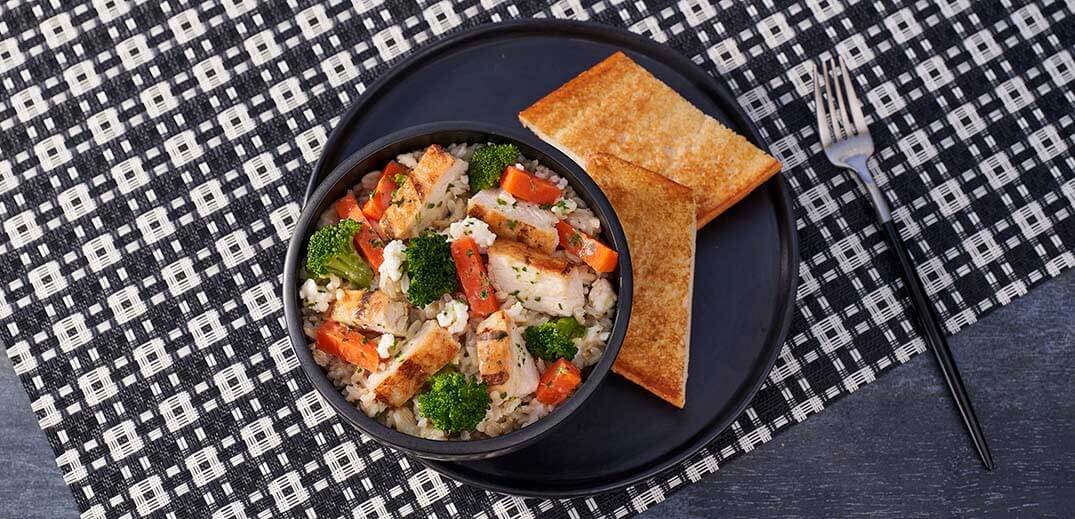
A Nestle PR photo of what one offering in its new line will look like.
“Vital Pursuit, a brand of line of frozen foods with significant protein and fiber content, is ‘intended to be a companion for GLP-1 weight loss medication users and consumers focused on weight management in the U.S.,’ as well as being ‘well-suited to support a balanced diet for anyone on a weight management journey,’ according to the company,” reports MediaPost.com.
Expect to see more such products, high in protein but perhaps lower in calories. No mention, however, about salt, fat or sugar content. We can’t wait to get our hands on nutrition labels for products in this new line. Watch for products in stores during the fourth quarter of this year.
Restaurant menus are notoriously filled with high-salt, high-fat, high-sugar offerings. If you’re trying to lower your consumption of those that evil threesome, you need to do your research before eating out. That’s why we have an entire page of this blog devoted to eating away from home.
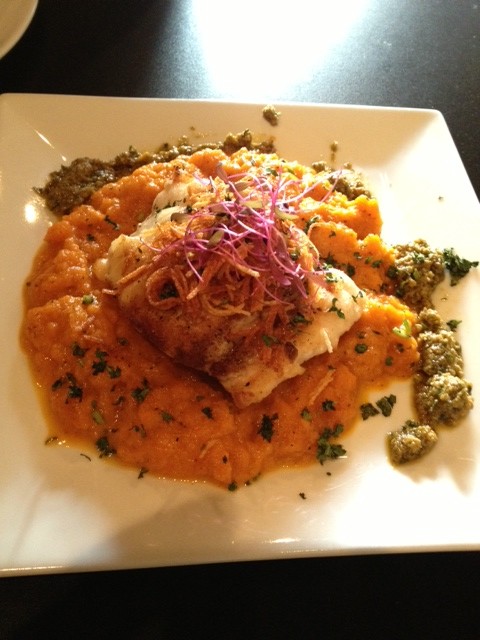
Halibut on a carrot puree at a restaurant in Milwaukee which is, sadly, no longer there. What was the salt content? We asked for it without salt added.
Are people doing their research? A recent study by foodservice supplier US Foods shows a large chunk of the population is checking menus before going out, for a variety of reasons.
The study found 83% of people eating out review menus from home before going to a restaurant, and of those, 50% decide what they’ll order before setting foot in the restaurant.
Also encouraging, from a health standpoint, 58% say nutritional value information impacts their ordering, although here portion size and calorie content seems to be the major concern.
More people need to be checking salt content, it’s the most dangerous in most restaurant options.
US Foods gathered this data by surveying 1,003 people last September, reflecting the demographic makeup of the general American population.
Olive oil should be a go-to good fat for any heart patient. Plus it can taste great, I use it not only on salads but on grilled veggies and a host of other dishes, just check my recipe page.
And now there’s more good news, a study has found it can cut the risk of developing dementia.
“Scientists examined data collected over almost three decades on about 93,000 middle-aged adults. At the start of the study, participants were 56 years old on average and had no history of cardiovascular disease, a major risk factor for dementia.
“Every four years, participants completed dietary questionnaires detailing what foods they typically ate and indicating how often they consumed olive oil: no more than once a month; up to 4.5 grams (g), or 1 teaspoon (tsp) daily; between 4.5 and 7 g (1.5 tsp) daily; or more than 7 g daily.
“Compared with people who rarely if ever consumed olive oil, those who got at least 7 g a day were 28 percent less likely to die of dementia-related causes by the end of the study, according to results published in JAMA Network Open.
Food trucks have been hot for years but in my Chicago suburb, Evanston, early restrictions limited them largely to one Mexican food truck that shows up at all the the local festivals, and which always seemed a bit overpriced to me.
But that changed dramatically in recent weeks when not one, but two food trucks featuring classic East Coast lobster rolls came to town. Full disclosure, I love lobster. My wife and I honeymooned in Maine back in 2007, primarily for the lobster, which we had several times a day at the rock bottom prices it sells for there.
Yet, getting lobster in the Midwest can be of a hit or miss proposition. The ubiquitous Red Lobster, for example, has the blandest lobster I ever tasted. We never go there. More likely, we buy our own and boil or grill it at home.
So I was really excited to see two lobster trucks posting on Facebook about their planned stops here in Evanston. Neither was cheap, $25 from Happy Lobster, $23 for a lobster roll from Cousins, but I tried them both and a clear winner emerged — Cousins Maine Lobster.
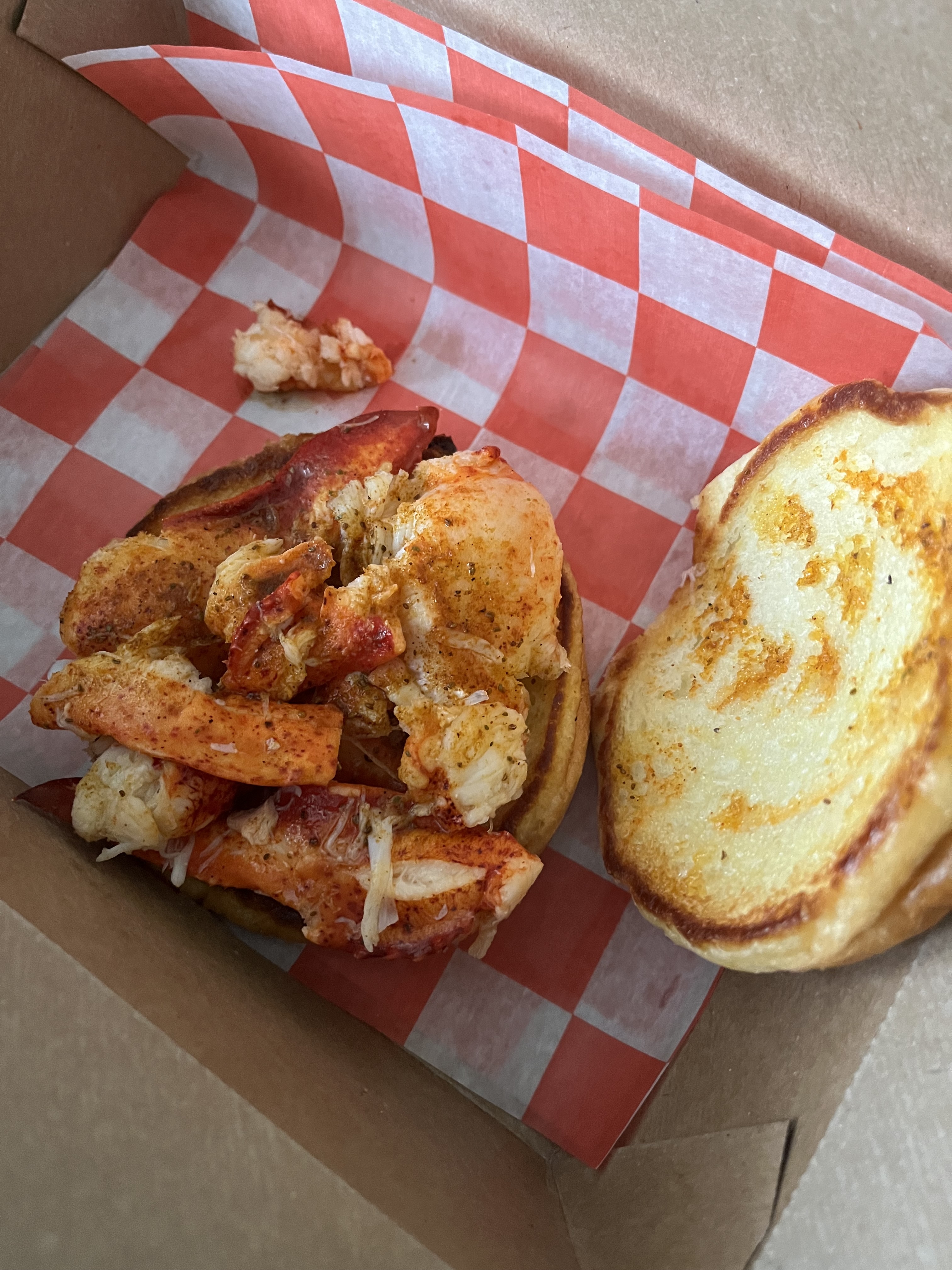
The other, Happy Lobster, didn’t really serve a traditional Maine lobster roll. It used a hamburger bun-type bun. A real lobster roll uses a hot dog bun-like split roll, toasted. Anyone from New England, or anyone who grew up in New York and went to Nedick’s knows what those are.
You can see the difference in the photos below:
Cousins also had just the right hint of mayo, although that too is a departure from traditional rolls which can have lobster meat swimming in mayo.
The staff at Cousins also was much friendly. Setting up in a local microbrewery parking lot, they were giving out shirts, hats and other freebies and talking to people as they walked up.
Happy Lobster’s truck parked at a local hospital during lunchtime and, although it encouraged online ordering ahead, did not have my order ready when I showed up on time. Several of its customers were forced to stand around in the rain waiting for their orders.
Is lobster heart-healthy? It is high in cholesterol content, once thought to be harmful, but thinking has changed on that. It also is high in omega-3 fatty acids, which these days are considered heart-healthy.
So if you see a Cousin’s truck coming to your town, give it a try, I highly recommend it.


 The No Salt, No Fat, No Sugar Journal