When I saw Justvegantoday.com writing this piece about hidden sugars, I thought — haven’t I written about that before? Yes, severel times it seems. But it’s good to have an annual reminder.
Sugar is hiding everywhere in our food supply, be aware.
“Sugar often masquerades under various aliases, making it even more challenging to identify them in an ingredients list. Common names include fructose, high fructose corn syrup, sucrose, and dozens more. Manufacturers often use these alternative names to disguise the actual amount of sugar they are putting into products,” Justvegantoday.com writes.
The Food and Drug Administration has new rules proposed for labeling foods healthy, rules that go to salt, fat and sugar content. These rules will allow foods to put labels on the front instead of the back of their packaging and to call themselves “healthy” if they meet the new criteria, reports the Washington Post.
Expect to see nutrition claims on the front of packaging under new FDA guidelines.
“Under the proposal, manufacturers can label their products “healthy” if they contain a meaningful amount of food from at least one of the food groups or subgroups (such as fruit, vegetable or dairy) recommended by the dietary guidelines. They must also adhere to specific limits for certain nutrients, such as saturated fat, sodium and added sugars. For example, a cereal would need to contain three-quarters of an ounce of whole grains and no more than 1 gram of saturated fat, 230 milligrams of sodium and 2.5 grams of added sugars per serving for a food manufacturer to use the word “healthy” on the label.” the Post reports.
It’s good to see salt content getting more attention, maybe now we’ll start to see some meaningful reductions in salt content for processed foods.
Sadly in recent years, even food and what is healthy have become political footballs. The Obama administration was strongly behind improving school lunch menus and encouraging children especially to develop healthier diets. The Trump administration abandoned those efforts. The Biden administration seems to again be addressing America’s obesity epidemic and poor eating habits. Hopefully, that will continue even if Republicans regain control of Congress in the upcoming mid-term elections.
This blog is all about eating less sodium (and less fat and sugar). Cutting back on salt helped lower my blood pressure over the years and can do the same for you. We write about low-salt foods and recipes so much, we assume everyone knows how much salt they should be eating every day. But of course that’s not true, so here’s a quick primer we found recently on tylerpaper.com.
“The American Heart Association recommends no more than 2,300 milligrams a day of sodium and moving toward an ideal limit of no more than 1,500 mg per day for most adults. On average, Americans eat more than 3,400 milligrams of sodium each day,” writes Claudann Jones Texas A&M AgriLife Extension Service.
Read every label for salt content!
The author talks about where to find salt content on food labels and also includes this handy primer of all the terms food processors use about salt, most designed to make you think the products have less sodium than they actually do:
• Sodium-free – Less than 5 milligrams of sodium per serving and contains no sodium chloride
• Very low sodium – 35 milligrams or less per serving
• Low sodium – 140 milligrams or less per serving
• Reduced (or less) sodium – At least 25 percent less sodium per serving than the usual sodium level
• Light (for sodium-reduced products) – If the food is “low calorie” and “low fat” and sodium is reduced by at least 50 percent per serving
• Light in sodium – If sodium is reduced by at least 50 percent per serving
She also reminds readers to think about how many servings of a given product they would normally eat. The label lists salt for one serving but who really eats only one serving of anything?
It didn’t occur to me at the time that the Kroger reduced-sodium olives I bought would still have more salt than a Lindsay low-sodium olive I usually purchase at another store. But when I got home, I compared the labels and found there was indeed a major difference in sodium content.
Here’s the side-by-side comparison:
The Lindsay olives on the left have 40 mgs of salt in five olives while the Kroger olives on the right have 70 mgs.. And for some reason, the lower-salt olives have more calories! Always read food labels, you never know what you’ll find.
If you’ve ever felt confused about the dates on food products, you’re not alone. Roughly 84% of consumers toss a product if the date on the package, whether called “Use by” or “Sell by” or “best if used by” is reached or passes, found a study of 1,029 consumers done back in 2016, reports the journal Waste Management.
The problem is those terms are not regulated, so food processors are free to sue whatever language they want. And they say the dates just indicate “peak flavor” or when a store should stop displaying a product. None of the terms relates to food safety, reports a story on the survey in Time.
So how do you know when food is spoiled? Follow the old expression “The Nose Knows,” the article suggests. If something smells bad, it is. If it taste bad or looks bad (IE visible mold), toss it.
A new report that some might have hoped would dampen the debate on genetically modified foods (GMOs) gave each side something to be happy about and so likely doesn’t change the contentious nature of GMOs, according to media reports this week.
Here’s what food labels could look like in Vermont– noting GMOs.
The report Tuesday from the National Academies of Sciences, Engineering, and Medicine, said GMOs are safe to eat, something critics don’t believe, but it also said using them isn’t helping U.S. crop yields all that much because weeds and pests are adapting to them, as is nature’s way. Continue reading “More fuel to the GMO debate”→
Reading food nutritional labeling is something I advocate religiously on this blog. Few people realize just how much salt, fat and sugar is in most items they pick up in a typical supermarket. Those who are aware are increasingly shopping at non-traditional supermarkets and food vendors, but I fear they’re not reading labels either, simply assuming what they buy at such stores in healthier. Big mistake.
I recently came across a fascinating concept out of England regarding labels — putting icons on labels to show how much of a given activity, say running, you’d need to do to burn off the calories in a given food item you buy. Continue reading “Activity-based food labeling? Wow what a concept”→
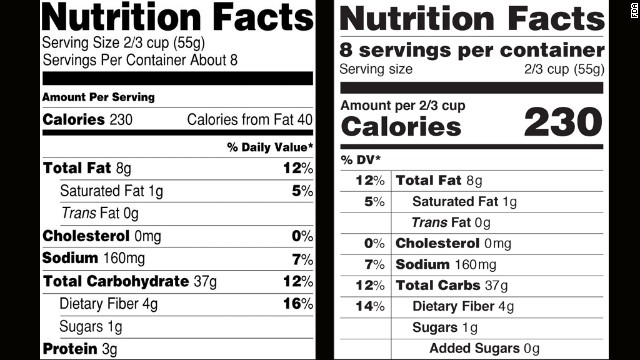
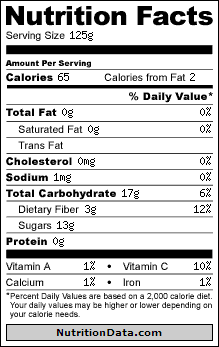
You should be thoroughly reading the labels on all processed foods you buy. If you don’t understand the nutrition panels on food and beverages, learn to read them intelligently.Learn how to read this on every food item you buy.
Also, learn what you can and cannot have in your diet. Labeling can be confusing, as a recent article I read points out. Labels often carry exaggerated claims about a product’s healthiness or benefits it may or may not give you. Look past all that and concentrate on the nutrition panels. And get a conversion app for your phone that can translate grams into weights you can understand. U.S. nutrition labels list portion size in grams, who exactly measures that way other than high school science lab students? Continue reading “Food labels– read them and know what they mean”→



 The No Salt, No Fat, No Sugar Journal