Time for our annual hidden sugar primer

When I saw Justvegantoday.com writing this piece about hidden sugars, I thought — haven’t I written about that before? Yes, severel times it seems. But it’s good to have an annual reminder.

Sugar is hiding everywhere in our food supply, be aware.

“Sugar often masquerades under various aliases, making it even more challenging to identify them in an ingredients list. Common names include fructose, high fructose corn syrup, sucrose, and dozens more. Manufacturers often use these alternative names to disguise the actual amount of sugar they are putting into products,” Justvegantoday.com writes.

How to combat the sugar rush?

Continue reading “Time for our annual hidden sugar primer”

Low-salt Easter turkeys are scarce in 2024

One of the most popular posts on my blog this time of year deals with making turkey for Easter dinner to cut down on your salt intake at the holiday table. You can read it by clicking Low-salt Easter dinner: how to enjoy the holiday meal.

Sarra Lee reduced sodium oven roasted turkey
Beware self-basting turkeys, they are loaded with salt. Always read the nutrition label before buying.

In the post-Covid food retailing environment, however, finding a fresh, low-sodium turkey has been tough. Two mainline supermarkets I went to had only one turkey brand, Jennie-O or Butterball, in freezer and refrigerated cases crammed with high-salt hams. Those turkeys come with self-basting fluids that are loaded with salt.

I finally turned to Whole Foods which thankfully had fresh turkeys, although even those had more salt, 125 mg a serving, than truly fresh turkeys which have about 75 mgs per serving. And I had to pay up, around $3 a pound, for the fresh turkey.

Another issue, stores are no longer carrying low-fat turkey gravy. During and after Covid, supermarkets cut the number of products they carried to simplify their supply chain management, and to increase profits. Low-salt, low-fat and low-sugar items suffered as a result.

Shop carefully this Easter, always read nutrition labels and enjoy a peaceful Sunday dinner.

10 worst foods if you have high blood pressure

I’m just getting back to this blog after several months off and what better to start with than foods that cause high blood pressure. I recently came across this video from someone who calls himself TheCookingDoc.

Imagine soups are low in sodium and fat, a rarity for any prepared soup.
If you must buy pre-made soup, read the labels and look for the lowest salt content.

Canned soup is the worst on his list, likely because of all the salt. Cookies are on the list, added sugar, processed meats, candy. It’s a list of what Americans normally eat.

So if you have high blood pressure, watch it and then start changing your eating habits.

ThecookingDoc sounds like a kidney specialist, here the link to his website.

Think cereal is healthy? Think again when it comes to these not-so-magnificent seven

We blogged recently about proposed new food labeling requirements that would allow foods to be labeled “healthy” if they met certain criteria for salt, fat and sugar content, along with other requirements. Pundits already are looking at what those rules would mean for certain groups of products, like breakfast cereals.

CNBC.com recently reported that these seven cereals would not be considered healthy under the new rules:

“For a healthy stamp from the FDA, cereals have to contain three-fourth ounces of whole grains and no more than 1 gram of saturated fat, 230 milligrams of sodium and 2.5 grams of added sugars,” CNBC reports.

These are only the tip of the unhealthy iceberg, expect a lot more processed foods to be called out if these new labeling rules get enacted.

What’s healthy? New rules are coming from the FDA to help answer that question

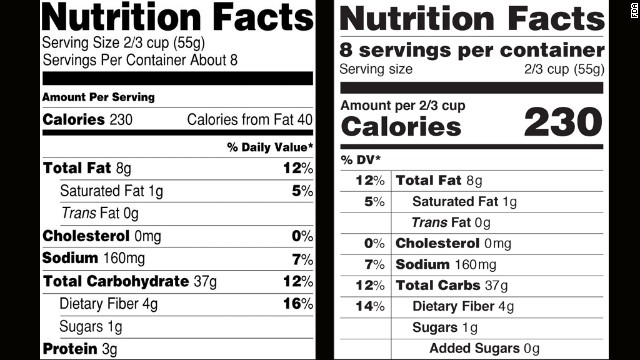
The Food and Drug Administration has new rules proposed for labeling foods healthy, rules that go to salt, fat and sugar content. These rules will allow foods to put labels on the front instead of the back of their packaging and to call themselves “healthy” if they meet the new criteria, reports the Washington Post.

A comparison of old and newly proposed nutrition panels on food labels.A comparison of old and newly proposed nutrition panels on food labels.A comparison of old and newly proposed nutrition panels on food labels.
Expect to see nutrition claims on the front of packaging under new FDA guidelines.

“Under the proposal, manufacturers can label their products “healthy” if they contain a meaningful amount of food from at least one of the food groups or subgroups (such as fruit, vegetable or dairy) recommended by the dietary guidelines. They must also adhere to specific limits for certain nutrients, such as saturated fat, sodium and added sugars. For example, a cereal would need to contain three-quarters of an ounce of whole grains and no more than 1 gram of saturated fat, 230 milligrams of sodium and 2.5 grams of added sugars per serving for a food manufacturer to use the word “healthy” on the label.” the Post reports.

It’s good to see salt content getting more attention, maybe now we’ll start to see some meaningful reductions in salt content for processed foods.

Sadly in recent years, even food and what is healthy have become political footballs. The Obama administration was strongly behind improving school lunch menus and encouraging children especially to develop healthier diets. The Trump administration abandoned those efforts. The Biden administration seems to again be addressing America’s obesity epidemic and poor eating habits. Hopefully, that will continue even if Republicans regain control of Congress in the upcoming mid-term elections.

People still don’t get the connection between salt consumption and poor health

I’ve written about how food processors are not increasing the number of products they sell that have low-sodium claims on them. Maybe its because people still don;t seem to get how harmful all the salt they consume is.

A new survey found that while 64% of Americans know eating too much salt is unhealthy only 37% say they track their salt consumption.

You can read more about the survey — the site won’t let me take excerpts for my blog — by clicking here.

And if you’d like to know the difference between all the salt claims you see on food packages, check this Cooking Light guide to salt claims.

Nutrition claims will continue to ignore low-salt

Food processors have been rolling out lots of low- and no-sugar products during the pandemic but not low-salt ones, said speakers at a 2022 food outlook presentation hosted by The Food Institute.

The pandemic has Americans thinking more about wellness and good nutrition, but that apparently hasn’t gotten them to realize they eat much more salt than they need every day.

Younger consumers also are concerned about sustainability, so sales of products with sustainability claims are likely to increase as Millennials’ buying power increases over the next five to six years, speakers said. Expect more meat-substitute products as well, including lab-grown offerings created cell-by-cell to resemble fish.

Looking at restaurants, the prediction was that restaurant sales levels would not return to what they were pre-pandemic in 2019 until 2023.

Speakers at the presentation included an old boss of mine, Joan Driggs, now vice president, content and thought leadership at IRI, a market research firm. We worked together at Mintel, another market research firm and were both journalists in our former lives.

Other scheduled speakers were:

Mike Kostyo
Trendologist and Senior Managing Editor, Datassential

Chris Dubois
Senior Vice President, Protein Practice Leader, IRI

Why you have to read the nutrition label — a barbecue sauce comparison

I have repeatedly harped on the importance of reading food labels so you can stay on a low-salt, low-fat, low-sugar diet. And I’ve created an entire page of low-salt, low-fat, low-sugar products that I use regularly since my heart issues began in 2012.

With summer hear and all of us grilling outside again, reading labels becomes even more important for products you might not be using in winter, like barbecue sauce.

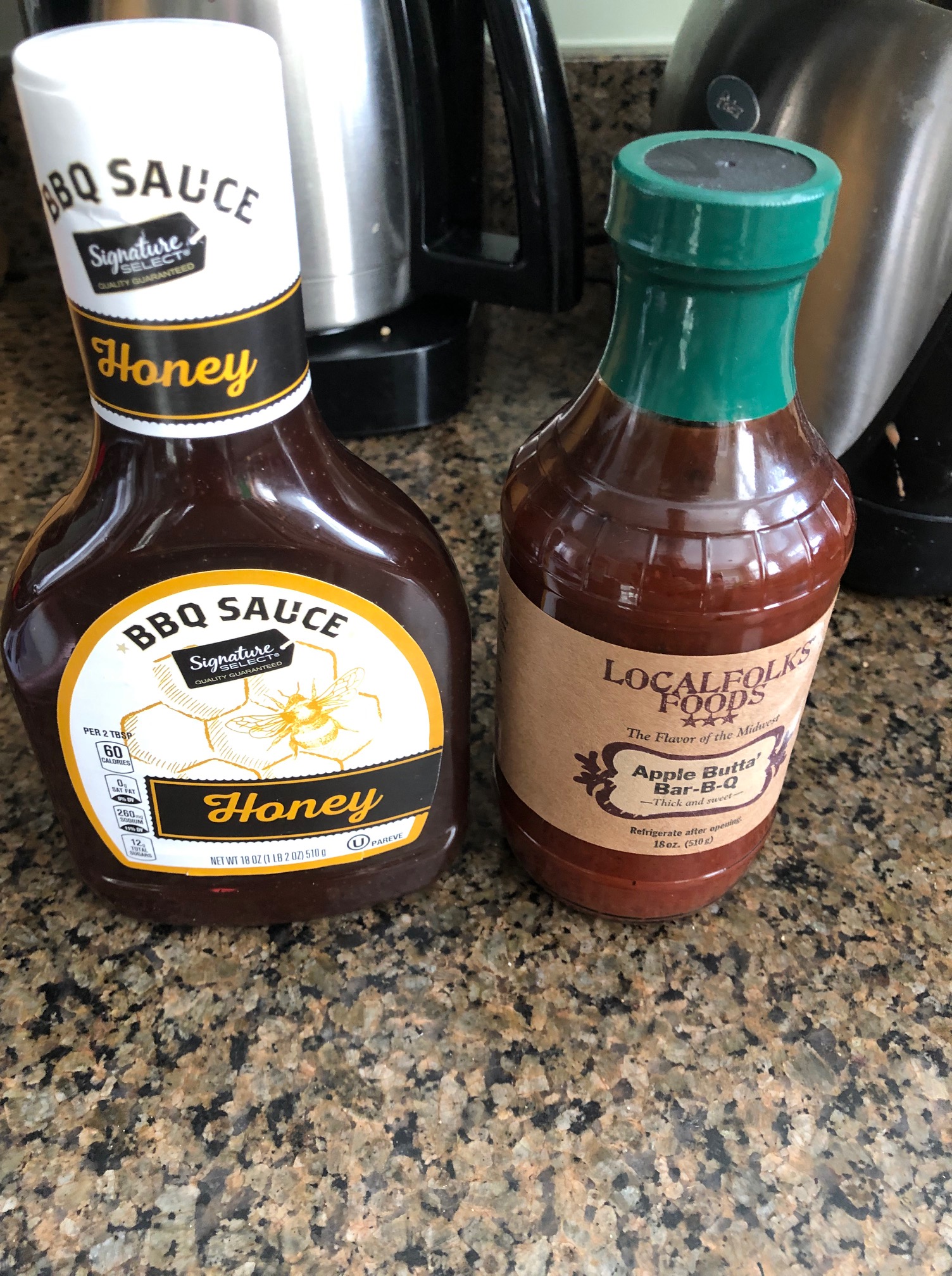
Take a look at these pictures of two brands — Localfolks low-salt, low-sugar barbecue sauce, and a store brand, Signature Select (an Albertson’s house brand). I use nothing by Localfolks now, but happened the get the Signature Select bottle free ina recent store give-away.

A serving of the Signature select, 37 grams, has 260 mgs of sodium and 12 grams of sugar, 14 grams of carbs if you count those as well.

The Localfolks measures one serving as an ounce, which is 28.34 grams, so about a third less. Still, it has only 30 mgs of sodium and 4 grams of sugar, five grams of carbs. Even adding a third to that gets you to only 40 mgs of sodium and about five and a third of sugar.

Salt and sugar hide in all processed foods, that’s wehy most Americans eat more than they should. Read those food labels, and happy grilling!

Meals kits are getting popular but beware the hidden salt!

Meal kits, which have all the ingredients for a given night’s dinner, are gaining in popularity, especially among younger consumers who may not have very developed cooking skills. Several companies will deliver them to people’s home and now supermarkets are stocking their own versions. The idea may sound appealing, but beware and, as always, read the ingredient labels before buying any.

Doing that myself, I found what seemed like a relatively appealing kit — with pasta and tomatoes, was a salt bomb, containing 1,320 mgs of salt per serving or 2620 mgs in the entire package which is supposed to be two servings. Continue reading “Meals kits are getting popular but beware the hidden salt!”

What the dates on food actually mean

If you’ve ever felt confused about the dates on food products, you’re not alone. Roughly 84% of consumers toss a product if the date on the package, whether called “Use by” or “Sell by” or “best if used by” is reached or passes, found a study of 1,029 consumers done back in 2016, reports the journal Waste Management.

The problem is those terms are not regulated, so food processors are free to sue whatever language they want. And they say the dates just indicate “peak flavor” or when a store should stop displaying a product. None of the terms relates to food safety, reports a story on the survey in Time.

So how do you know when food is spoiled? Follow the old expression “The Nose Knows,” the article suggests. If something smells bad, it is. If it taste bad or looks bad (IE visible mold), toss it.

It’s still consumer beware.

A WordPress.com Website.

Up ↑

2ND ACT Players

Intimate theater showcasing emerging talent

a2eternity

An honest look at living with bulimia.

Loving Leisure Time

This is how I spend my quality free time...

Cooking Up The Pantry

Feeding a hungry family!

The Little Home Kitchen

Big living from a small space

The Basic Life

Balance your body and your life with the alkaline lifestyle.

Italian Home Kitchen Blog

Italian Home Kitchen Blog

Fat2Fab

By: Raquel Moreira

Hipsters And Hobos

Food, foraging, recipes... simple, cheap & stylish... ideal for hipsters or hobos

Dietwise

Expert dietary advice from a registered dietitian and nutritionist

Emerging Adult Eats

Food for folks who have yet to figure it all out

arlynnpresser

Just another WordPress.com site

Compartiendo Mi Cocina

Sharing My Kitchen

Aromas and Flavors from my Kitchen

"Home is where the Hearth is"

What To Have For Dinner Tonight

Simple and delicious dinner inspiration

sahamed27

The greatest WordPress.com site in all the land!