Our relationship with food — the good, the bad and the ugly

Fortunately for many of us in the United States, we aren’t worried about eating enough to survive. We are in a unique position, historically, in that were have access to many, many more calories than we need to survive — hence the obesity epidemic.

So at the start of every year, we’ve developed a new food ritual — people searching out new diets to drop some pounds after their massive end-of-year holiday eating binges.

Why do we, as a relatively affluent society, have such a love-hate relationship with food? I’ve recently heard from three experts delving into this question in their own ways.

Why Am I Eating This: Is This the Nourishment I Need? In this book, Sandy Robertson walks readers through a simple, seven-step process designed to help transform their relationship with food.

“What’s the right amount of food that satisfies our nutrition and fuel needs but satisfies us psychologically, too?” Robertson asks in a recent interview. “When we’re eating, we’re feeding our soul; we’re feeding our emotions; but it’s really all about balance and finding that right balance for us.” 

Robertson’s public relations person has sent me a review copy of her book, so expect to read more about it here shortly.

In a second book,  Nurture: How to Raise Kids Who Love Food, Their Bodies, and Themselves — Heidi Schauster, a nutrition therapist, provides a guide for parents and caregivers about feeding, eating, and discussing bodies with children and teens.

Schauster writes from her nearly 30 years of experience treating clients with disordered eating, her own experience as a recovered person, and as a parent of two young adults.

“In a culture that has such narrow parameters for what makes a ‘good’ or ‘attractive’ body, it is important that we don’t put too much importance on what the body looks like,” says Shauster. “Accepting and feeling neutral about the inevitable body changes of aging is something that we can teach our kids at a young age and through our example.”

And the third is This Is What You’re Really Hungry For: Six Simple Rules to Transform Your Relationship with Food to Become Your Healthiest Self by Kim Shapira M.S., R.D.— a celebrity dietitian and nutritional therapist.

Shapiro provides six rules to transform your relationship with food:

  • Eat when you’re hungry
  • Eat what you love
  • Eat without distractions
  • Take 10,000 steps every day
  • Drink 8 cups of water a day
  • Get 7 hours of sleep

Simple? If it was we wouldn’t have so many books looking at our curious 21st century relationship with food. Good luck with your dieting in 2024!

How to Cope with Holiday Stress Eating & Feel Better

A Guest Post from Nutritionist Amy Fox

The holiday season is meant to be the most wonderful time of the year, but for many people, it’s a time of stress and emotional eating. The abundance of delicious food and the pressure of buying gifts, preparing meals, and socializing with family and friends can take a toll on our mental and physical health. But it’s important not to beat ourselves up about it. This article will provide five practical tips for coping with holiday stress eating. We will also discuss what happens when we stress eat and how to feel better afterwards.

Identify Your Triggers

The first step to avoiding stress eating is to identify your triggers. It could be boredom, loneliness, anxiety, or the availability of sweets. Once you know your triggers, you can create a plan to avoid them. For example, if you tend to eat when stressed, consider taking a short walk or practicing deep breathing exercises. One of my favorite strategies is decluttering a drawer or folding a load of laundry.

Continue reading “How to Cope with Holiday Stress Eating & Feel Better”

Can you eat healthy in food halls? Maybe but it takes some searching

Food halls are all the rage these days, especially in urban areas with lots of old buildings to recycle. Circumstances forced me on the road for three weeks recently, so I was able to visit food halls in New York, Minneapolis and Chicago.

Did I find anything healthy to eat? Aside from some salad places and a tasty beet salad in Chicago, generally no. But I did find some great pizza in New York and Minneapolis.

So if you find yourself in a food hall, check all the stalls before buying yourself a meal. Try to minimize how unhealthy you eat that day.

These food halls are generally in repurposed older buildings, feature local outlets rather than national chains (McDonald’s need not apply), sport a variety of ethnic offerings like Mexican, Asian and Indian dishes, and throw in some traditional American unhealthy options like giant burgers and barbecue.

Continue reading “Can you eat healthy in food halls? Maybe but it takes some searching”

Avoid these late-day habits to avoid weight gains

Binging on ribs? Don’t, not if you want to drop some pounds.

While this blog isn’t mainly concerned with dieting and weight loss, we do write about it from time to time because, more often than not, heart patients like me need to drop some pounds.

So we’d suggest checking out this piece at Eatingwell.com, 5 Things You Should Not Do After 5 P.M. If You’re Trying to Lose Weight, According to a Dietitian.

They’re pretty common-sense, if you think about them. Like not opening a refrigerator without a plan. Or binge-eating late in the day.

But, if you need reminders, print the list out and put it on your fridge! Staying up too late is the toughest pone for me. I’ve always enjoyed being awake when everyone else is asleep. I feel the world can’t hurt me then.

Anyone else?

Always hungry? Me too, here are reasons why

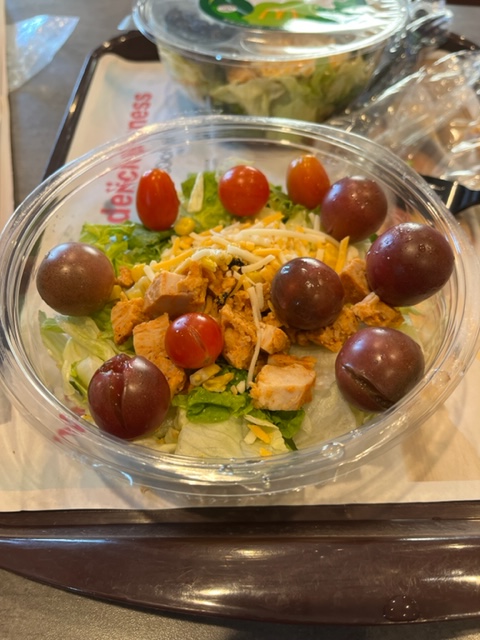
An old McDonald’s salad. This never filled me up.

Friends tend not to believe me when I say I’m always hungry, but it’s true. I can pretty much eat any time of day and not feel full unless I really stuff myself, hence my current weight issues. So this piece got my attention: 8 Eating Habits That Can Leave You Feeling Hungrier.

I do several of those, like eating fast and mindless munching, not to mention filling up on unsatisfying foods.

Thankfully, this piece claims to have solutions for these habits, so give it a read and see if it helps you.

Worried about holiday eating? Try this AARP quiz

The end-of-year holidays are tumbling at us now, one after the other. From Thanksgiving to New Year’s Eve, they all mean lots of eating, and difficulty staying on a low-salt, low-fat, low-sugar diet.

Worried you have no tools to eat healthy this time of year? Try this AARP quiz to see what you know and don’t know about healthy holiday eating.

It’s eight questions and they’re harder than you think. I only got three right, and I write about eating all the time!

One tip — I try to start holiday meals with a large salad option for everyone, the one pictured here was my Thanksgiving salad. Happy Holidays!

What’s healthy? New rules are coming from the FDA to help answer that question

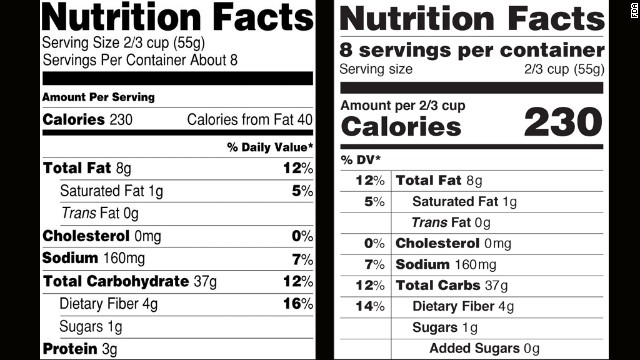
The Food and Drug Administration has new rules proposed for labeling foods healthy, rules that go to salt, fat and sugar content. These rules will allow foods to put labels on the front instead of the back of their packaging and to call themselves “healthy” if they meet the new criteria, reports the Washington Post.

A comparison of old and newly proposed nutrition panels on food labels.A comparison of old and newly proposed nutrition panels on food labels.A comparison of old and newly proposed nutrition panels on food labels.
Expect to see nutrition claims on the front of packaging under new FDA guidelines.

“Under the proposal, manufacturers can label their products “healthy” if they contain a meaningful amount of food from at least one of the food groups or subgroups (such as fruit, vegetable or dairy) recommended by the dietary guidelines. They must also adhere to specific limits for certain nutrients, such as saturated fat, sodium and added sugars. For example, a cereal would need to contain three-quarters of an ounce of whole grains and no more than 1 gram of saturated fat, 230 milligrams of sodium and 2.5 grams of added sugars per serving for a food manufacturer to use the word “healthy” on the label.” the Post reports.

It’s good to see salt content getting more attention, maybe now we’ll start to see some meaningful reductions in salt content for processed foods.

Sadly in recent years, even food and what is healthy have become political footballs. The Obama administration was strongly behind improving school lunch menus and encouraging children especially to develop healthier diets. The Trump administration abandoned those efforts. The Biden administration seems to again be addressing America’s obesity epidemic and poor eating habits. Hopefully, that will continue even if Republicans regain control of Congress in the upcoming mid-term elections.

Do you know what 2,000 calories look like? I’m guessing no, so read on

Everyone has likely seen it somewhere, either on a food label or on a restaurant nutrition page — portions and everything else to do with our daily nutritional intake are calculated on a 2,000-calorie-a-day diet. But I doubt most people realize just how few calories that is compared to what average Americans eat every day.

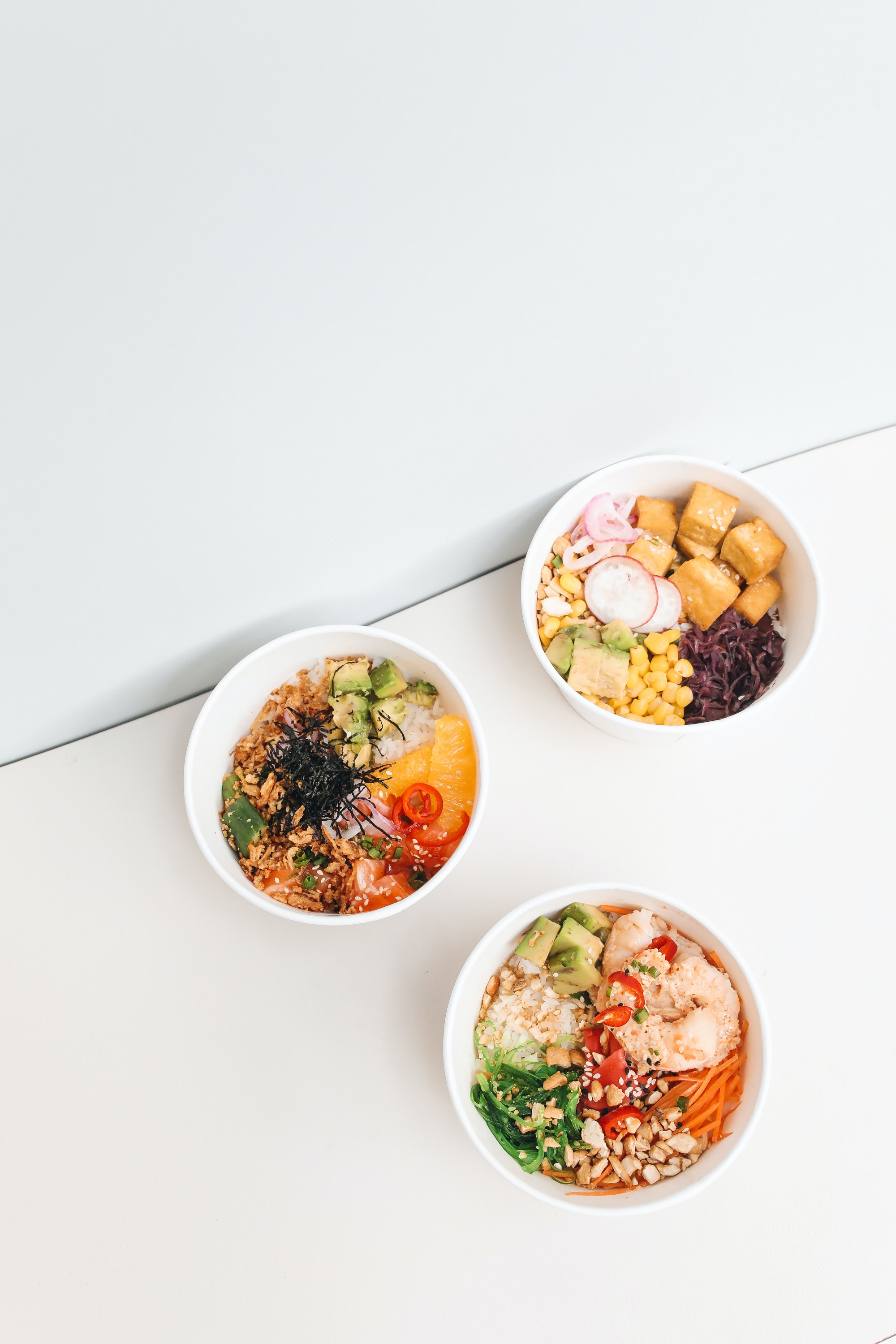
The FoodNetwork.com meal plan involves a lot of food in bowls, not sure why. Photo by Polina Tankilevitch:

So here’s a great piece to read from FoodNework.com, What Does 2,000 Calories Look Like? Use it as a companion piece to something I wrote, Picturing 1,500 calories a day; it’s not much. Generally, women are advised to eat 1,500 calories a day while men get 2,000.

The FoodNetwork.com piece has menus that will put you at the 2,000-calorie mark, whether you eat meat or not, which is handy if you cook for a family with members on different diets.

There’s a lot on these menus I wouldn’t touch, but hopefully you’ll find some items you like and can add to your recipe list.

Pandemic food casualty: Costco food-court salads are off the menu

I sat down at a Costco food court this week, something I haven’t done since before the pandemic when Costco foolishly eliminated chocolate frozen yogurt from its menu.

Looking at the new ordering touch screens, I realized another of my old Costco mainstay items is also gone now — food-court salads.

The wall says it all — no more salads at Costco, only junk food now.

This picture I took of the menu wall says it all — Costco has nothing even remotely low-salt, low-fat, low-sugar on its menu anymore.

For years, my regular Thursday meal there would be a salad, without the massively fat-filled dressing, and a chocolate frozen yogurt. Both are gone.

I dropped my more expensive Costco executive membership back when the chocolate yogurt disappeared. Now I’m really glad I did that then. I have no reason to eat at Costco food courts. For the stop I made recenty, I only bought a diet Pepsi for the road.

It will be interesting to see if Costco comes back with a simpler salad like McDonald’s did. Its salad joins its sheet cake, the ill-conceived asai it had replaced frozen yogurt with, and its holdout vanilla frozen yogurt as pandemic food casualties at Costco.

As the pandemic winds down, it’s becoming tougher than ever to find healthy, or at least not unhealthy, fast foods.

Trying to kick sugar — here’s one no-sugar diet plan

I’ve written many times that of salt, fat and sugar, sugar is by far the hardest for me to give up. I tried a no-sugar challenge in 2020 but the pandemic and its concurrent stress wiped out that plan. So I’m always interested when I see pieces like EatingWell.com’s No-Sugar Diet Plan.

MY half slice of Junior's chocolate mousse cheesecake, Mmmmmmm.
My love of such things as cheesecake make it difficult for me to kick sugar.

The plan includes a week of do-it-yourself meals and is based on consuming 1,200 calories a day, so obviously for women rather than men who should consume around 2,000 calories daily.

Some of the items mentioned, like peanut butter energy balls, I would never eat because of my aversion to nuts. But some of the dinner main dishes, like Mediterranean ravioli with artichokes & olives, sound worth trying.

I’d suggest giving the menu plan a look and picking and choosing what you like.

A WordPress.com Website.

Up ↑

2ND ACT Players

Intimate theater showcasing emerging talent

a2eternity

An honest look at living with bulimia.

Loving Leisure Time

This is how I spend my quality free time...

Cooking Up The Pantry

Feeding a hungry family!

The Little Home Kitchen

Big living from a small space

The Basic Life

Balance your body and your life with the alkaline lifestyle.

Italian Home Kitchen Blog

Italian Home Kitchen Blog

Fat2Fab

By: Raquel Moreira

Hipsters And Hobos

Food, foraging, recipes... simple, cheap & stylish... ideal for hipsters or hobos

Dietwise

Expert dietary advice from a registered dietitian and nutritionist

Emerging Adult Eats

Food for folks who have yet to figure it all out

arlynnpresser

Just another WordPress.com site

Compartiendo Mi Cocina

Sharing My Kitchen

Aromas and Flavors from my Kitchen

"Home is where the Hearth is"

What To Have For Dinner Tonight

Simple and delicious dinner inspiration

sahamed27

The greatest WordPress.com site in all the land!